
EV Charger Installation Cost in the Antelope Valley (2026 Guide)

If you just bought an electric vehicle or you’re about to, one of the first questions is a fair one: what will it actually cost to charge it at home? The honest answer is that there’s no single price, and anyone who quotes you a flat number sight-unseen is guessing. What we can do is walk you through exactly what drives the cost of an EV charger installation here in the Antelope Valley, so you know what you’re paying for and why.
Level 1 vs. Level 2 Charging Explained
Every EV comes with a Level 1 cord that plugs into a standard 120-volt wall outlet. It works, but it’s slow — often adding only 3 to 5 miles of range per hour. If you drive a lot around Lancaster and Palmdale, or your commute runs down into LA or out toward the High Desert, Level 1 usually can’t keep up overnight.
Level 2 charging runs on a 240-volt circuit, the same kind of power your electric dryer or range uses. It’s dramatically faster — typically adding 20 to 40 miles of range per hour depending on your vehicle and charger. For most homeowners, a full charge overnight becomes routine. That speed is why nearly everyone installing a home charger goes with Level 2, and it’s the setup that requires a properly wired dedicated circuit.
The Real Cost Factors
Here’s where the number actually comes from. Two houses on the same street can have very different install costs, and it comes down to a handful of things:
Panel capacity. Your electrical panel has only so much room. If it’s already close to full, adding a 240V circuit for a charger may require freeing up space or upgrading the panel entirely. More on that below.
Distance from the panel to your parking spot. A charger mounted on the garage wall right next to the panel is a short, simple run. A charger at the end of a long driveway, on the far side of the house, or in a detached garage means more wire, more conduit, and more labor. Distance is one of the biggest swing factors.
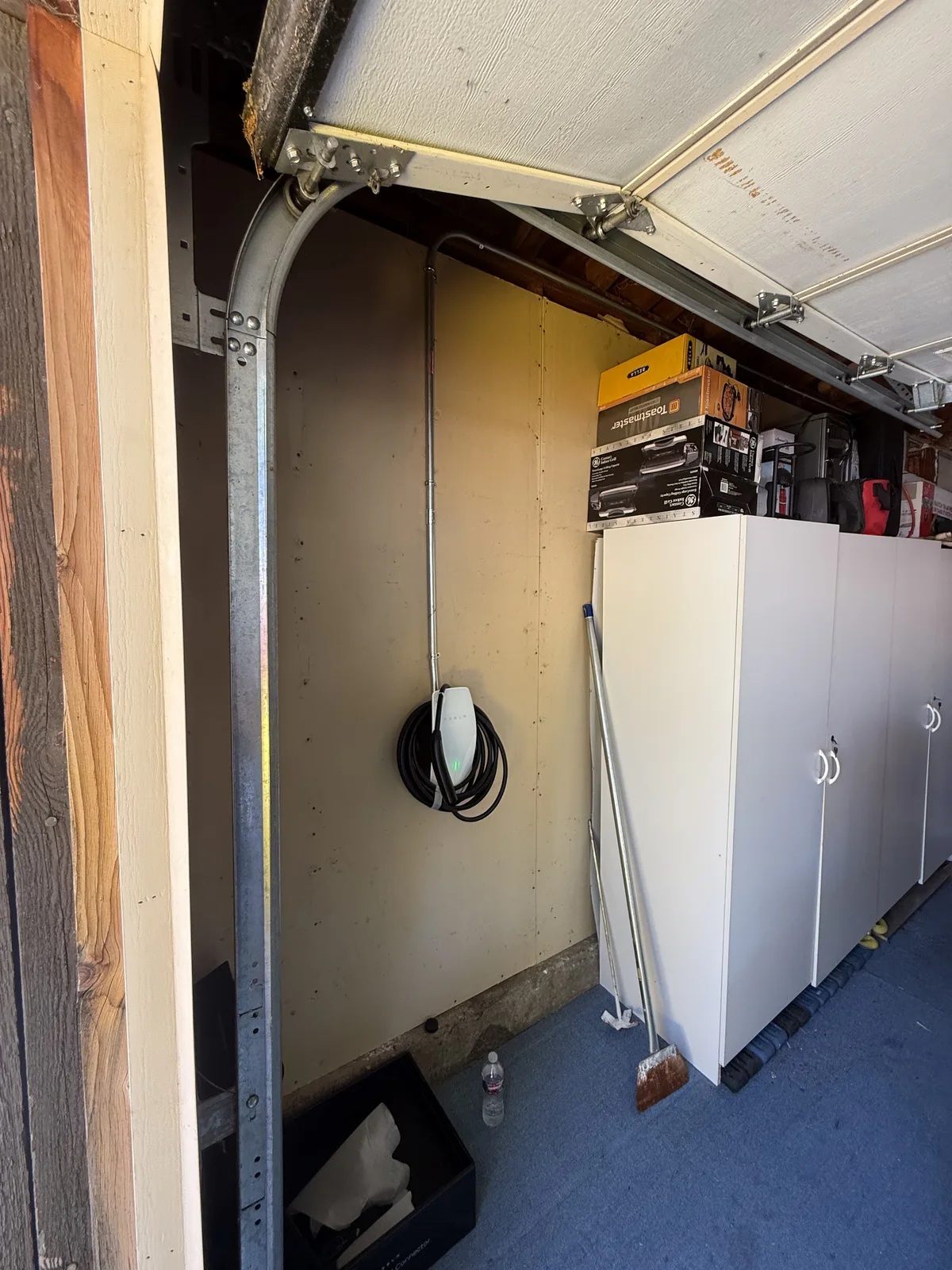
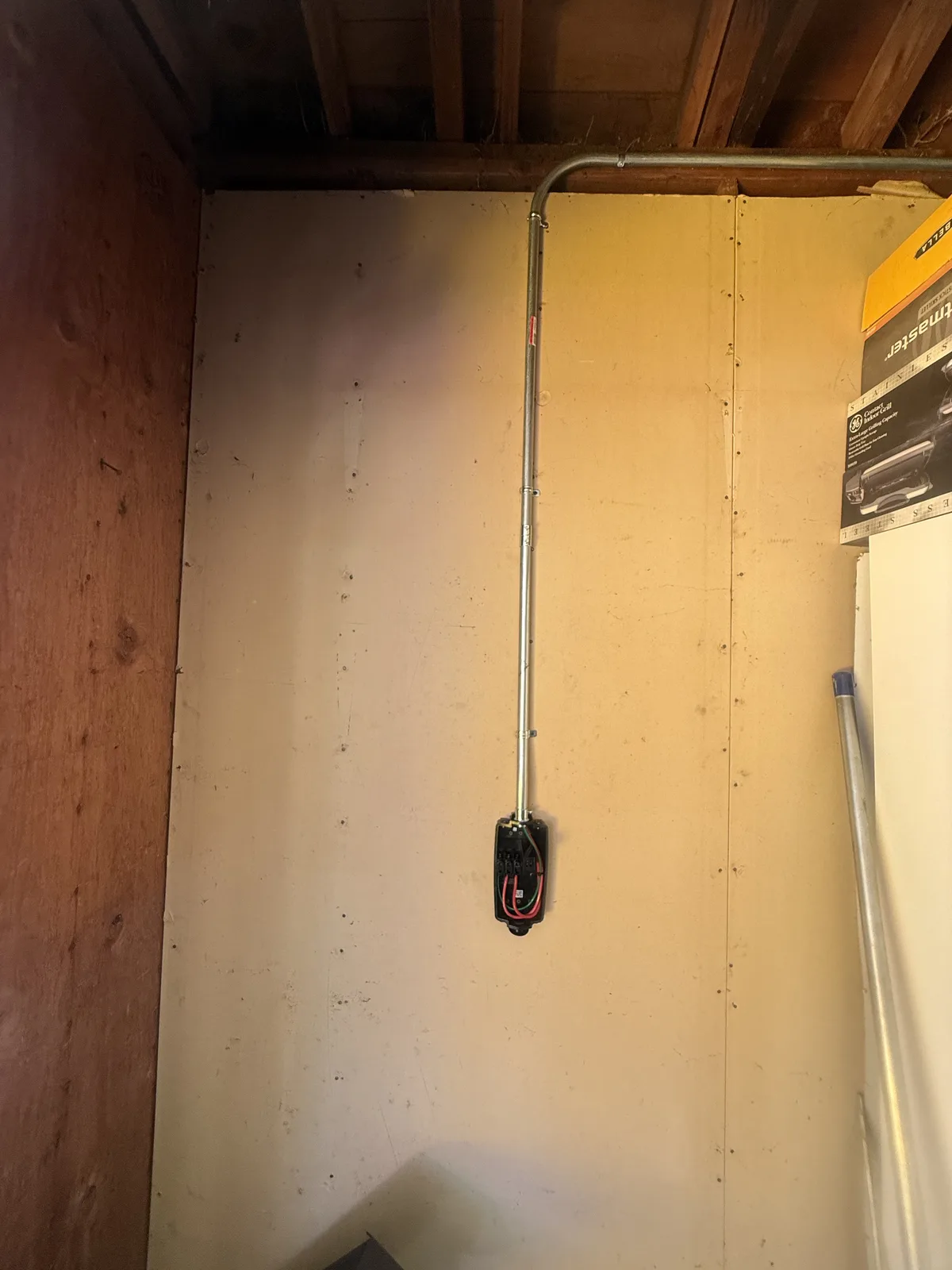
Trenching and conduit. If the cable has to cross an outdoor area — say, from the house to a detached garage or a carport — we may need to trench and run conduit underground. That’s more involved than a clean run through an attic or along a garage wall.
Hardwired vs. NEMA 14-50 outlet. You can either hardwire the charger directly or install a NEMA 14-50 outlet and plug the unit in. An outlet gives you flexibility to unplug and take the charger with you; hardwiring is often the better choice for higher-power units and outdoor installs. Each has code requirements — a 14-50 outlet on a modern install typically needs GFCI protection, which affects the parts involved.
Charger model. Some folks buy their own charger; others want us to supply one. Prices vary widely between basic units and smart chargers with Wi-Fi, scheduling, and app control. The charger itself is a line item you control.
Do You Need a Panel Upgrade First?
This is the question that most often changes the total. Many older homes in the Antelope Valley were built with 100-amp service, which was plenty before EVs, solar, heat pumps, and electric appliances started stacking up. Adding a 40- or 50-amp charging circuit to an already-loaded 100-amp panel isn’t always possible without making room.
Sometimes there’s a smart workaround — a load management device that lets the charger share capacity with other circuits, avoiding a full upgrade. Other times, a panel upgrade genuinely is the right call, especially if you’re planning for solar or a second EV down the road. When we come out, we look at your actual panel and load, tell you honestly which path you’re on, and explain why. If a dedicated subpanel or additional circuit makes more sense than a full upgrade, we’ll say so.
Rebates Can Cover Much of the Panel and Circuit Work
Here’s the part a lot of Antelope Valley drivers miss: your utility may pay for a big share of the job. Genius Electric is an approved contractor for SCE’s Charge Ready Home program and PG&E’s Trade Ally Network, and both put money toward exactly the work that pushes the cost up — the panel upgrade and the dedicated 240-volt circuit.
- SCE Charge Ready Home (most of the Antelope Valley and High Desert): up to $4,200 for income-qualified households, or $2,100 for homes in a designated disadvantaged community, toward a 200-amp panel upgrade and the charger circuit.
- PG&E Trade Ally Network (Northern and Central California): up to $5,000 when a panel upgrade is bundled with a Level 2 charger, or up to $2,000 for a standard Level 2 install.
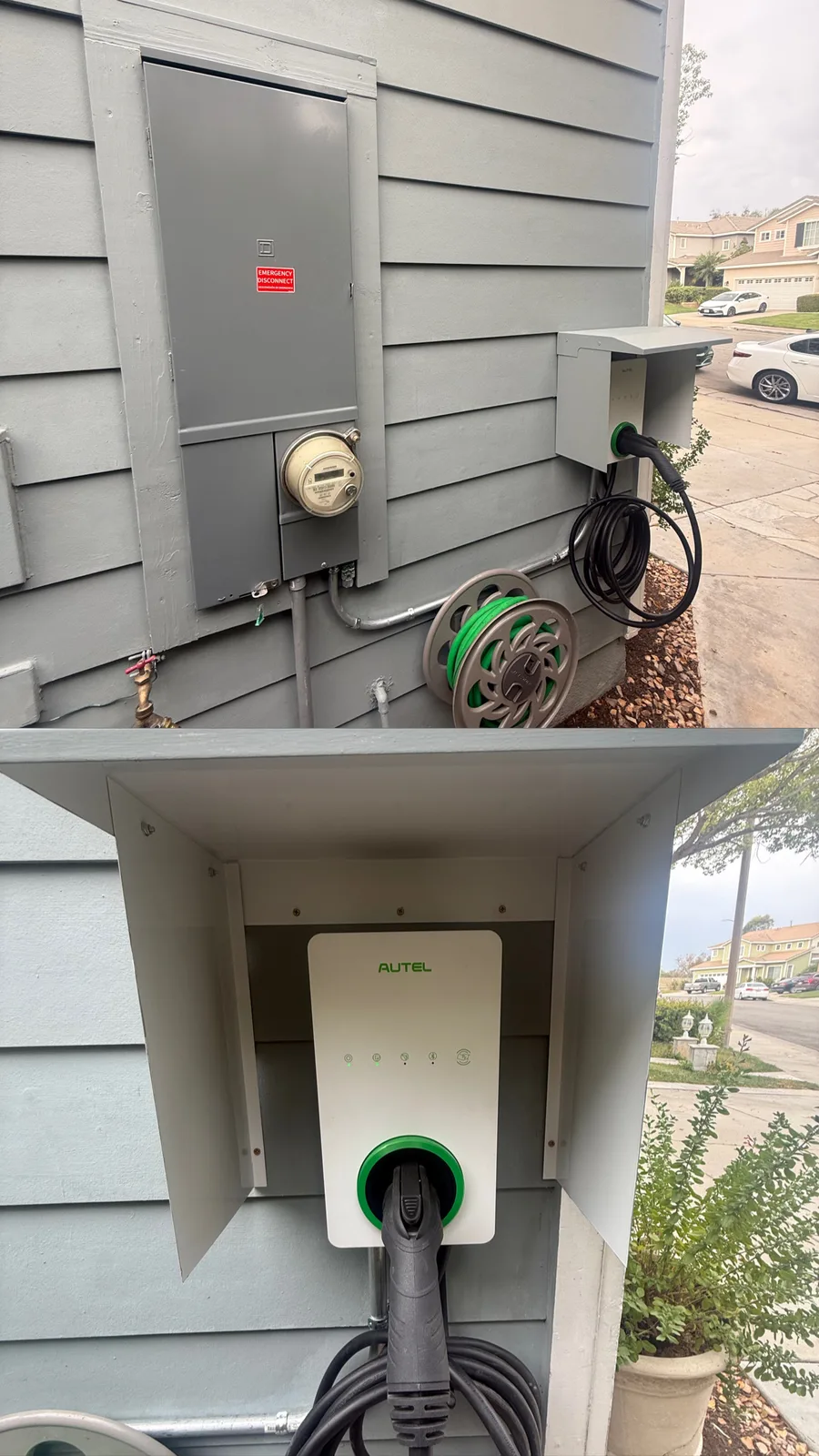
The utility decides who qualifies and the final amount, and you apply with them first to get prequalified in your own name. Once you have that, we help with the program paperwork, pull the permit and do the install. Our EV charger rebates page walks you through which program fits your home.
Permits and Timeline in Lancaster and Palmdale
A home EV charger install is permitted work. In Lancaster and Palmdale, that means pulling an electrical permit and having the finished work inspected. This is a good thing — it protects you, keeps your homeowner’s insurance valid, and confirms the circuit is safe.
For a straightforward install, the physical work is often done in a single day. The overall timeline depends on permit processing and scheduling the inspection, which varies by jurisdiction and time of year. If a panel upgrade is part of the job, add time for coordinating with the utility. We handle the permit paperwork and inspection scheduling so you’re not chasing city offices — that’s part of the service.
Why a Properly Sized Dedicated 240V Circuit Matters
It’s tempting to see EV charging as “just an outlet,” but it isn’t. A charger pulls a heavy, sustained load for hours at a time — far harder on wiring than a dryer that runs for 40 minutes. An undersized wire, a shared circuit, or a cut corner doesn’t just charge slowly; it runs hot, and heat in electrical connections is how fires start.
A properly sized dedicated circuit means the wire gauge, breaker, and connections are all matched to the load with the right safety margin, wired to current code. Done right, you plug in every night and never think about it again. Done wrong, you’ve got a hazard behind your drywall. This is exactly the kind of careful, clean, well-explained work we take seriously — sized correctly, installed neatly, and cleaned up spotless when we leave.
Ready for a Straight Answer on Your Home?
Every home is different, and the only way to give you a real number is to look at your panel, your parking spot, and how you drive. We’ll walk your property, explain your options in plain English, and quote you fairly — no upsell, no guesswork. Get in touch through our contact page or call Genius Electric Corp directly at (661) 744-6232. We’re a 24-hour, owner-operated company serving the Antelope Valley and beyond, and we’d be glad to power up your driveway the right way.
Common questions
Can I install a Level 2 charger without upgrading my panel?
Often, yes. If your panel has the capacity and an open space for a 240-volt circuit, the charger can go in without an upgrade, and a load-management device or a lower charging rate can sometimes make a tight panel work. We check your actual panel and load before recommending anything.
Do I need a permit for an EV charger in Lancaster or Palmdale?
Yes. A home charger means a new 240-volt circuit, which is permitted work that gets inspected when it's done. We pull the permit and schedule the inspection as part of the job.
Who applies for the SCE or PG&E charger rebate?
You do, first. You apply with your utility and get a Prequalification ID (SCE) or pre-approval (PG&E) in your own name. After that we help with the program paperwork, pull the permit and do the install.
How long does an EV charger install take?
A straightforward install is often done in a single day. Permit processing, inspection scheduling and, if a panel upgrade is part of the job, utility coordination add time that varies by city.