
SCE Charge Ready Home Rebate: How It Works for Your Home
Buying an electric car is the easy decision. Figuring out whether your house can charge it is where most people get stuck — and very often the answer depends on your electrical panel, not the charger. Southern California Edison’s Charge Ready Home program was built for exactly that problem. Genius Electric is an approved contractor for it, so below we walk through what the SCE Charge Ready Home rebate pays toward, who it’s for, and the order things happen in. If you want the short version and the apply links, start at our EV rebates page.
What the Charge Ready Home rebate pays toward
The program is aimed at the electrical work behind a home charger, and it comes in two parts.
A 200-amp panel upgrade. Your electrical panel is the box where power from SCE comes into the house and gets split into circuits, each with its own breaker. Its amp rating is how much power the whole home can draw at once. Plenty of older homes have less than 200 amps of service, which was fine before EVs, central air and electric appliances all started sharing the same box. Moving up to 200 amps gives the house room for a charger without crowding everything else.
The dedicated 240-volt circuit a Level 2 charger needs. A Level 2 charger runs on 240 volts — the same kind of power an electric dryer uses — instead of a regular 120-volt wall outlet, and that’s what makes overnight charging practical. “Dedicated” means the charger gets its own breaker and its own wire run, shared with nothing else, because a car pulls a heavy load for hours at a time.
For qualifying households, the rebate can cover most or all of that panel and circuit work. Help buying the EV itself is a separate set of programs; we list those on the rebates page as well.
The two rebate tiers
SCE’s program has two levels:
- Up to $4,200 for income-qualified households — those under 80% of area median income. Area median income is the midpoint of household incomes where you live, so this tier is for households earning less than 80% of that figure.
- Up to $2,100 for homes in a designated disadvantaged community.
SCE decides whether you qualify and which tier applies, and eligibility and the final amount depend on your household, your location and your electrical panel. We can’t promise you a number before SCE does — and you shouldn’t trust anyone who does. What we can do is help you through the application and give you a straight answer about what your panel actually needs.
How it works, in order
The order matters, because the application is yours, not ours.
- Get a free look at your panel. Call us for a free estimate. We’ll confirm you’re an SCE customer — the Antelope Valley and High Desert are SCE territory — look at your panel and where you park, and tell you whether this program fits your situation.
- You apply with SCE. You create the account and submit the application yourself, and SCE issues a Prequalification ID in your name. The link to SCE’s application is on our EV rebates page, and we’re glad to walk you through it, but the application stays yours from start to finish.
- Hand us your Prequalification ID. Once you have it, we take over the contractor side: the permit, the program paperwork and the install.
- Install and inspection. We do the work to current code and to program standards, and it gets inspected before we call it done.
Two things you can check yourself before you call. First, look at your electric bill to confirm SCE is your utility. Second, open the door on your panel — just the door, not the metal cover behind it — and find the number on the main breaker, usually the large breaker at the top or a separate one near the meter. That number tells us a lot before we ever arrive.
What the install looks like
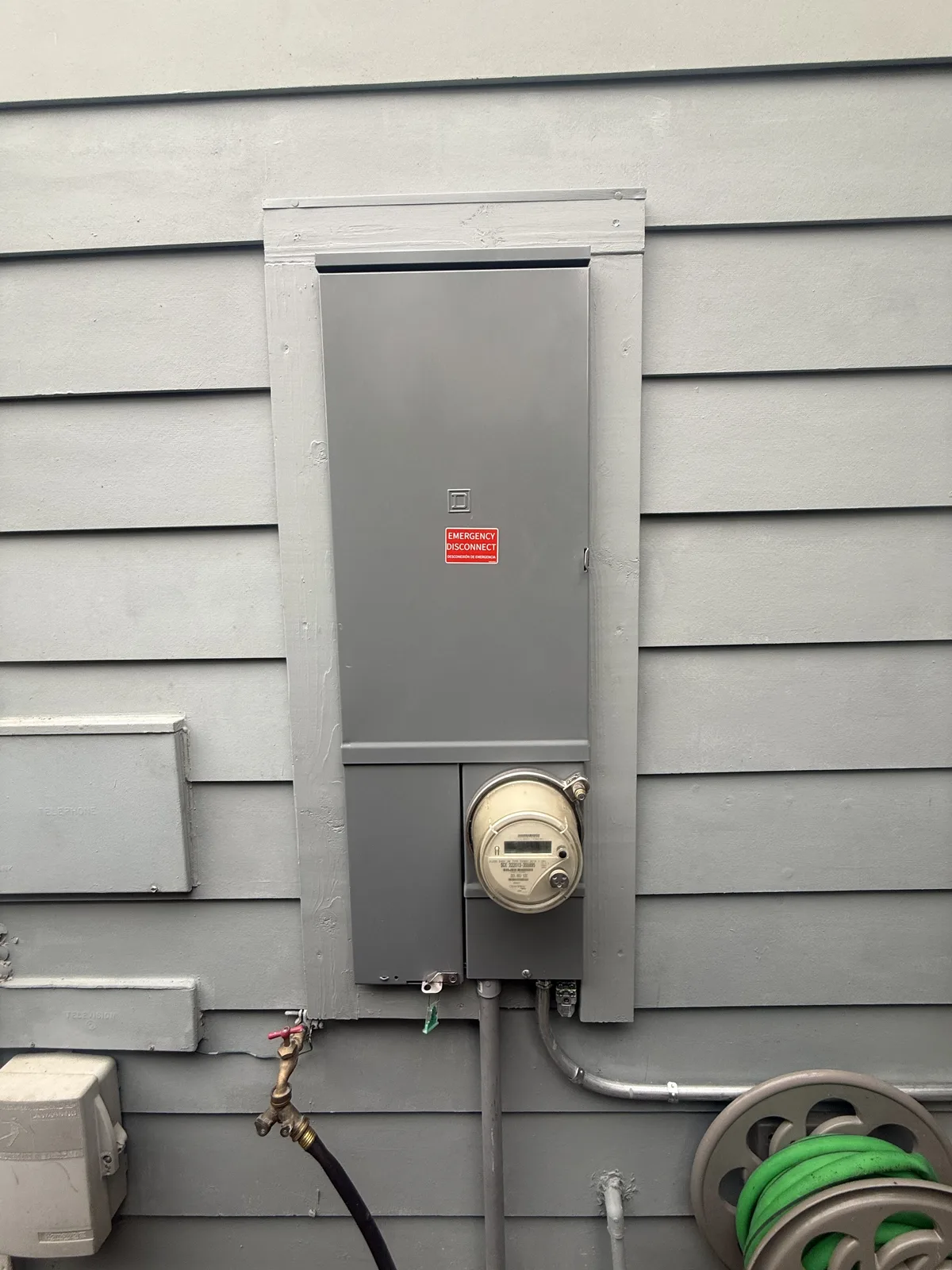
A Charge Ready Home job looks a lot like a standard panel upgrade with a charger circuit added on. On install day we coordinate the power shutoff with SCE, so the house is without power for part of the day while the old equipment comes out. In its place goes a new all-in-one meter-main — the meter and the main breaker in one cabinet — with an outdoor emergency disconnect: a clearly labeled main shutoff on the outside of the house that cuts power to the whole home. From there we run conduit to where you park, pull the wire for the dedicated 240-volt circuit, mount the charger, and confirm it’s charging before we leave.
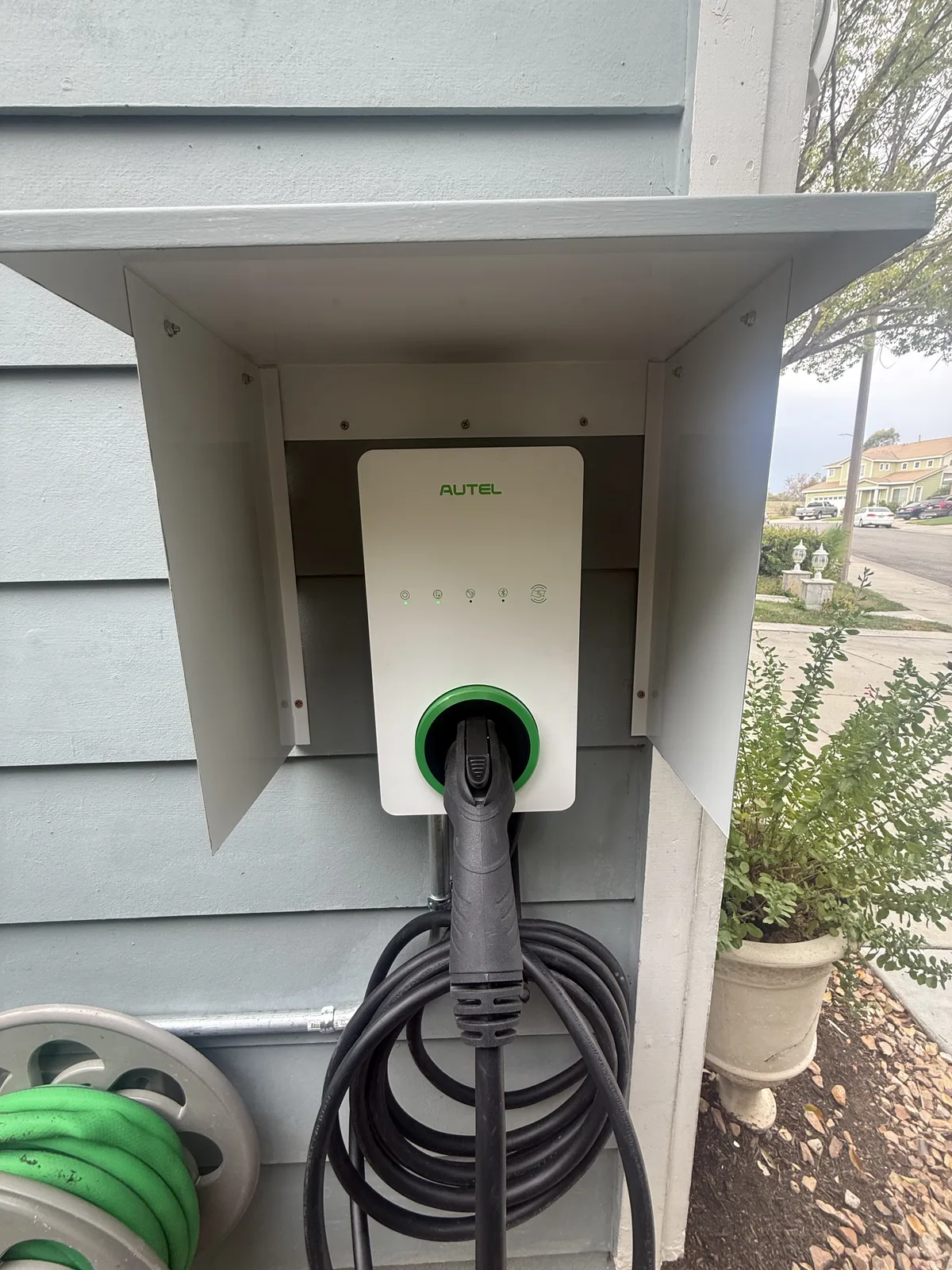
In Valencia, the old exterior panel wasn’t up to home charging. Through Charge Ready Home we replaced it with a new meter-main and outdoor disconnect, ran conduit around to the side yard, and mounted an Autel Level 2 charger under a weather hood — that’s the charger in the photo at the top of this post. The job passed inspection.
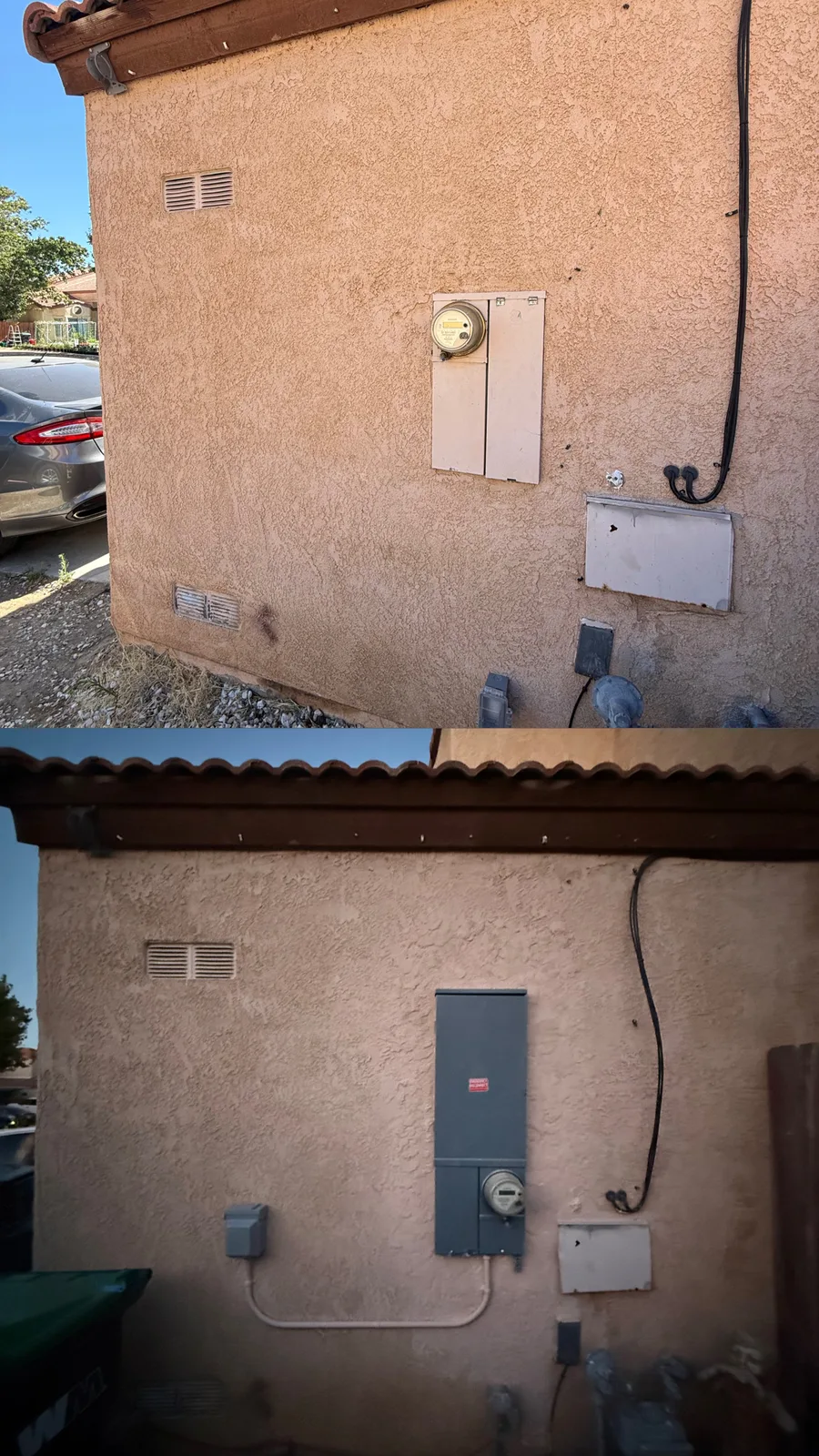
In Lancaster, the before photo tells the story: an old meter and box on the side of the house. We replaced them with a new all-in-one meter-main with an outdoor emergency disconnect, re-fed through clean conduit and ready for the dedicated 240-volt circuit a Level 2 charger needs. That job also went through Charge Ready Home and passed inspection. If you’re in Lancaster or anywhere else in the Antelope Valley, this is the kind of work the program is built around.
As for the charger itself, it should suit your car and where you park. We install Tesla Wall Connectors and hardwired Level 2 chargers from other brands — the Valencia job used an Autel — and our EV charger installation page covers how we size and place them.
A few practical tips before you apply
- Decide where you’ll charge. Garage or driveway changes the conduit run, and an outdoor charger needs weather-rated equipment and a sensible spot — the Valencia charger sits under its own hood.
- Keep everything in your name. The SCE account, the application and the Prequalification ID are yours. We help; we don’t apply on your behalf.
- Mention anything else you’re planning. A second EV, solar or a shop down the road can change what makes sense for the panel, so tell us early.
PG&E customers: a separate program
If your bill comes from Pacific Gas & Electric instead, Charge Ready Home isn’t your program. PG&E runs its own rebates through its Trade Ally Network, and we’re an approved contractor there as well. It offers up to $5,000 for a panel upgrade bundled with a Level 2 charger, or up to $2,000 for a standard Level 2 install. The order is the same: you apply with PG&E and get a pre-approval in your own name, then we handle the permit, paperwork and install. PG&E serves Northern and Central California, while here in the Antelope Valley and High Desert, homes are on SCE.
When to call an electrician
Applying is your part, and you can do it from the couch. Everything after that — the panel, the service connection and the 240-volt circuit — is licensed, permitted work, not a DIY job, because it involves the main power coming into your home. If you’re thinking about an EV, or you already have one trickle-charging off a wall outlet, reach out through our contact page or call (661) 744-6232 for a free estimate. We’ll look at your panel, confirm your utility, and help you get your application started.
Common questions
What is an SCE Prequalification ID?
It's the ID SCE issues to you when you apply for Charge Ready Home and are prequalified. It's in your name, and it's what we need before we start the permit and program paperwork on your job. Keep it handy once you have it — it's the first thing we'll ask for.
How do I know if my household is under 80% of area median income?
SCE makes that call when you apply — eligibility depends on your household, your location and your electrical panel. We can't tell you ahead of time whether you'll qualify, so don't rule yourself out by guessing. We're happy to walk you through the application so you get a real answer.
What if my panel is already 200 amps?
Then your home may already have room for a charger, and the dedicated 240-volt circuit may be all you need. What the program covers for your particular home is SCE's decision, so apply and let them tell you. Either way, we'll look at your panel for free and tell you honestly whether it can carry a Level 2 charger as it is.
Can I have other electrical work done during the same visit?
Usually, yes. The rebate is aimed at the 200-amp panel upgrade and the dedicated charger circuit, so anything beyond that — extra outlets, new lighting, a subpanel for the shop — gets its own quote. We keep the two clearly separate so you always know which part is which.