
Why Does My Breaker Keep Tripping? 6 Causes and What to Do

The space heater clicks on, the TV goes dark, and you’re out in the garage with a flashlight again. A breaker that keeps tripping is frustrating, but it’s also proof that a safety device is doing its job. The real question is why it’s tripping, because the answer can be as simple as too much on one circuit or as serious as a wire overheating inside a wall.
Here’s how to read the pattern, what you can safely try yourself, and the signs that mean it’s time to stop resetting and call an electrician.
What a Breaker Is Actually Doing
Every breaker in your panel guards one circuit: a run of wire that feeds a group of outlets and lights, or one big appliance. That wire can only carry so much current before it heats up, and the breaker cuts the power before it gets there.
A standard breaker trips on too much current for too long (an overload) or a sudden rush of current from a fault (a short). Breakers with a TEST button also trip when they sense current leaking to ground or the signature of arcing. Either way, the trip isn’t the problem. It’s the symptom.
The 6 Most Common Reasons a Breaker Keeps Tripping
1. An overloaded circuit
This is the usual suspect, and the easiest to fix. Out here, overloads follow the seasons: in summer, a window or portable AC sharing a bedroom circuit with a TV and a computer through a hot Antelope Valley afternoon; in winter, a space heater on a cold desert night. Anything that makes heat — heaters, hair dryers, toaster ovens, irons — pulls a lot of current, and two on one circuit is often all it takes.
The clue: the breaker holds for a while, then trips after several minutes of heavy use. It resets fine and stays on once the load comes down.
2. A short circuit
A short happens when a hot wire touches the neutral or another conductor, giving electricity a shortcut with almost no resistance. Current spikes and the breaker trips instantly, sometimes with a pop or spark at the outlet. Shorts come from damaged cords, failing appliances, a loose wire in an outlet or switch box, or a nail driven through a cable in the wall.
The clue: an immediate trip — the moment you plug something in, flip a switch, or reset the breaker.
3. A ground fault
A ground fault is current escaping to ground through something it shouldn’t: a metal box, a damp fixture, or in the worst case a person. In newer homes, kitchens, bathrooms, garages, laundry areas, and outdoor outlets have GFCI protection built to catch exactly this, either in the outlet or at the breaker.
The clue: trips that show up in wet weather, after the sprinklers run, or when one particular outdoor outlet is in use. Water in an outdoor box, a cracked cover, or a worn-out patio or yard fixture is a classic culprit.
4. An arc fault
An arc is electricity jumping a gap — across a frayed cord, a wire pinched behind furniture, or a loose connection — and arcs get hot enough to start fires. AFCI breakers, which newer homes have on bedroom and living-area circuits, watch for that pattern and shut the circuit off.
The clue: an AFCI breaker that trips when a certain lamp or cord is in use, or at random with nothing heavy running. Don’t write it off as a false alarm until the wiring has been checked.
5. A worn-out breaker
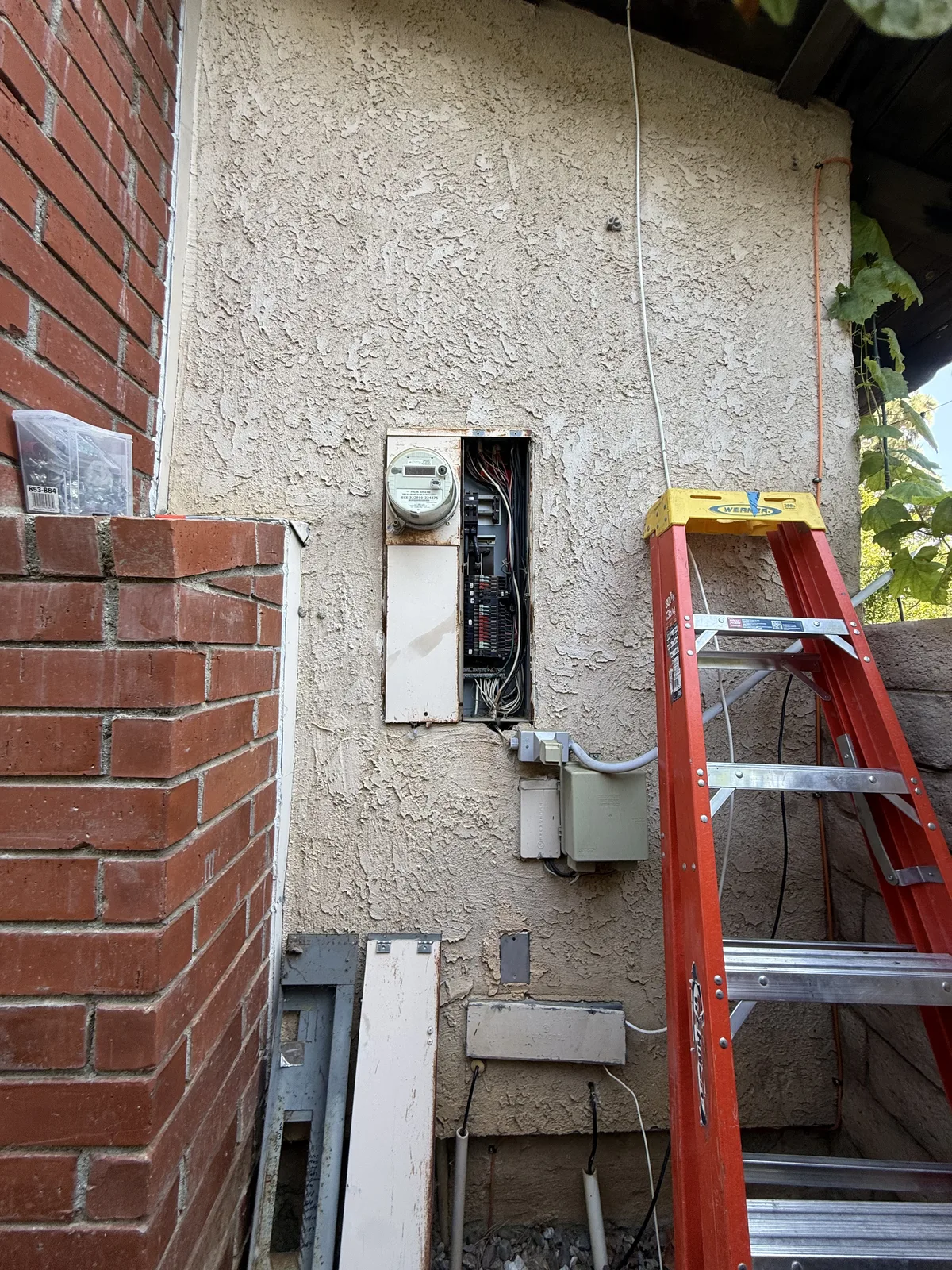
Breakers are mechanical parts, and they don’t last forever. An aging breaker can trip below its rating, or the spot where it clips into the panel can loosen and heat up. Corrosion on older exterior panels makes it worse.
The clue: one breaker suddenly trips on loads it used to handle, the handle feels loose or mushy, or the breaker looks discolored. Swapping a breaker is work inside the panel, so it’s an electrician’s job — and sometimes the panel itself is the bigger problem.
6. Loose connections
A loose wire at an outlet, switch, splice, or breaker terminal creates resistance, and resistance creates heat. Outlets wired with “backstab” push-in connections instead of screw terminals are a frequent source as they age. A loose connection can trip an AFCI, trip a standard breaker, or make lights flicker long before anything trips.
The clue: trips that come and go, lights on that circuit that flicker, or an outlet or switch plate that feels warm or looks browned.
How to Tell the Causes Apart
The pattern of the trips tells you a lot:
- Trips after several minutes of heavy use, then resets fine: almost always an overload.
- Trips instantly when you reset it, even with everything unplugged: a short or a wiring fault somewhere on the circuit. Stop here and call.
- Trips only when one appliance runs: that appliance or its cord is the likely problem, or it’s simply too big for the circuit it’s on.
- Trips in wet weather or after watering: a ground fault in an outdoor outlet, fixture, or box.
- Trips at random, with flickering lights or a warm outlet nearby: a loose connection, an arc fault, or a failing breaker.
Jot down when it trips, what was running, and the weather. That’s the same detective work we start with on every electrical repair and troubleshooting call.
What You Can Safely Do Yourself
A few steps are safe for any homeowner:
- Unplug the load first. Turn off or unplug everything on the dead circuit. Resetting into a full load just trips it again.
- Reset it the right way. Open only the small hinged door over the breaker handles — never unscrew the panel cover behind it. A tripped breaker usually sits in the middle, between ON and OFF. Push the handle firmly all the way to OFF until it clicks, then back to ON; pushed straight to ON, it often won’t latch. Use dry hands and stay off wet ground.
- Test one device at a time. Plug things back in one by one, giving each a few minutes. If the breaker trips the moment a certain appliance goes back in, set it aside and have it repaired or replaced.
- Spread out the load. Move the space heater or window AC to an outlet on a different circuit, and don’t run two heat-making appliances on the same one. The panel directory, or noting what goes dead when that breaker is off, tells you which outlets share a circuit.
What not to do: never hold a breaker on, tape it, or swap it for a bigger one — the breaker is sized to protect the wire. And a power strip or extension cord doesn’t add capacity; it just moves the overload.
Stop Resetting and Call an Electrician If…
These signs mean more than one appliance too many:
- It trips immediately every time, even with everything on the circuit unplugged.
- You smell burning or hot plastic near the panel, an outlet, or a switch.
- The panel or a breaker feels warm or buzzes. The panel door should be cool to the touch and quiet.
- You see scorch marks, melted plastic, or brown discoloration on an outlet, a switch plate, or the breaker itself.
- The breaker won’t stay on, won’t reset at all, or the handle feels loose.
- The same breaker keeps tripping even after you’ve moved loads around.
If you smell burning, switch off that breaker (or the main, if you can reach it safely) and call. If you see smoke or flame, get everyone out and call 911.
When the Real Fix Is More Capacity
Sometimes nothing is broken; the house just asks more of its circuits than they were built for. Plenty of older homes in Lancaster and across the Antelope Valley were wired with fewer circuits than a modern household uses.
Then the lasting fix is usually a dedicated circuit for the big load: its own breaker and wire, just for the AC, the microwave, or the shop tools. If the panel is full, old, or undersized for the house, a panel upgrade may be the better call. We’ll tell you honestly which you need — or when a simple load shuffle is all it takes.
When to Call an Electrician
If a breaker trips now and then when the heater and microwave run together, a little load juggling is usually enough. If it trips instantly, trips with nothing running, or comes with heat, buzzing, a smell, or scorch marks, leave the panel alone and get it diagnosed. Genius Electric Corp is a licensed, 24-hour electrician based in Lancaster. We trace tripping breakers to the real cause, explain what we found, and quote the repair up front. Send us a message or call (661) 744-6232.
Common questions
Is it safe to keep resetting a breaker that keeps tripping?
Resetting a tripped breaker once or twice, after you've unplugged what was running, is fine — that's what it's built for. But if it trips again right away, or keeps tripping after you've spread the load around, stop resetting it. Repeated trips mean the breaker keeps catching a real problem, and forcing it back on lets that problem keep heating the wiring.
Can I put in a bigger breaker so it stops tripping?
No. Each breaker is sized to protect the wire on its circuit, and a larger one lets that wire carry more current than it safely can before anything trips. That trades an annoyance for a fire risk. If a circuit truly needs more capacity, the right fix is a new dedicated circuit or a panel upgrade, sized and installed by an electrician.
Why does my breaker trip when nothing is plugged in?
A breaker that trips with nothing running usually points to a short, a ground fault, or a loose connection in the wiring itself, or to a breaker that has worn out. None of those can be fixed from the outlet side. Leave the breaker off and have an electrician trace the circuit.
Why does my breaker trip when it rains?
Rain and sprinkler water find their way into outdoor outlets, light fixtures, and junction boxes with worn covers or seals. That moisture creates a ground fault, and the GFCI protection on the circuit shuts the power off, which is exactly its job. Leave it off until things dry out, then have the wet box or fixture found and sealed or replaced.
Can a circuit breaker go bad?
Yes. Breakers are mechanical, and with age, heat, and corrosion they can start tripping below their rating, stop latching, or loosen where they clip into the panel. A breaker that feels warm, looks discolored, or won't stay on should be checked. Replacing one means working inside the panel, so it's a job for a licensed electrician.